
Selecting the ideal intumescent fire-resistant material
The reason it is selecting the ’ideal’ intumescent fire-resistant material and not ‘best’ is because ‘best’ is subjective, explains Carboline.
Relationships among each project’s circumstances mean that no material type or application method is universally superior. And unfortunately, these circumstances do not march one after another neatly in time. They are simultaneous and often at odds. So, what material or combination of materials makes the most sense – the lazy answer is, it depends.
The real answer reframes the question: What information do I need so that I know my specification will result in a satisfactory and timely delivery?
This guide doesn’t tell you what to choose, but it will help you think through how.
Required fire ratings
Matching intumescent materials to applicable required fire ratings has a way of being straightforward and prescriptive without being easy or fun.
Building codes state the fire rating or ratings a structure must meet, and then the normal push and pull of architecture and engineering results in a design for load-bearing members that satisfies the aesthetic vision and is feasible to build.
Intumescent fireproofing selection falls within that push and pull, where a crucial detail risks being overlooked: testing.
Laboratory testing verifies the thermal performance of structural members in a huge range of shapes and sizes. Yet it does sometimes happen that a design includes a shape or size never used before.
Architects do not go out of their way to include novel components in enclosed spaces where simpler, cheaper options will suffice. But it’s a different story if the component is prominent and essential in an exposed location, or somehow vital to structural integrity regardless of its visibility. What then?
Adjacent circumstances like cost and schedule will dictate what happens next. Maybe making that architectural statement is not so crucial after all, and the design is changed. Or maybe it isn’t, or maybe the part plays a vital structural role. If either is the case, that is the beginning of the long, expensive process to validate intumescent material performance over the novel design for the very first time.
Architectural design
The reason intumescent products exist in the first place is to achieve fire ratings with lower-profile and nicer-looking materials vs. cementitious products.
But differences in intumescent chemistries and applied protection thicknesses lead to different finish characteristics. Whether these characteristics are regarded as appealing is a matter of shifting opinion.
The general rule is that solvent-based and two-component epoxy intumescents cure to form an orange-peel texture. Some water-borne intumescents can achieve qualities almost indistinguishable from conventional high-gloss urethanes.
Sometimes that orange-peel texture is desirable. Other times it’s not, and so you either choose something else or adjust the budget, schedule, and specification accordingly to abrade away unwanted texture before applying a compatible decorative topcoat. If the latter path is chosen, it is essential that enough intumescent is initially applied so that the ensuring reduction in thickness does not bring it below the minimum. Project teams must weigh the aesthetic benefit of having their chosen colour or other finish qualities against the cost and schedule impact of applying a topcoat that has no functional purpose.
A popular way architects get the best of both worlds is to specify water-based intumescents in inoffensive neutral colours. If the colour is acceptable, then no additional surface prep, material or labour is required to achieve the great-looking finish water-based materials provide.
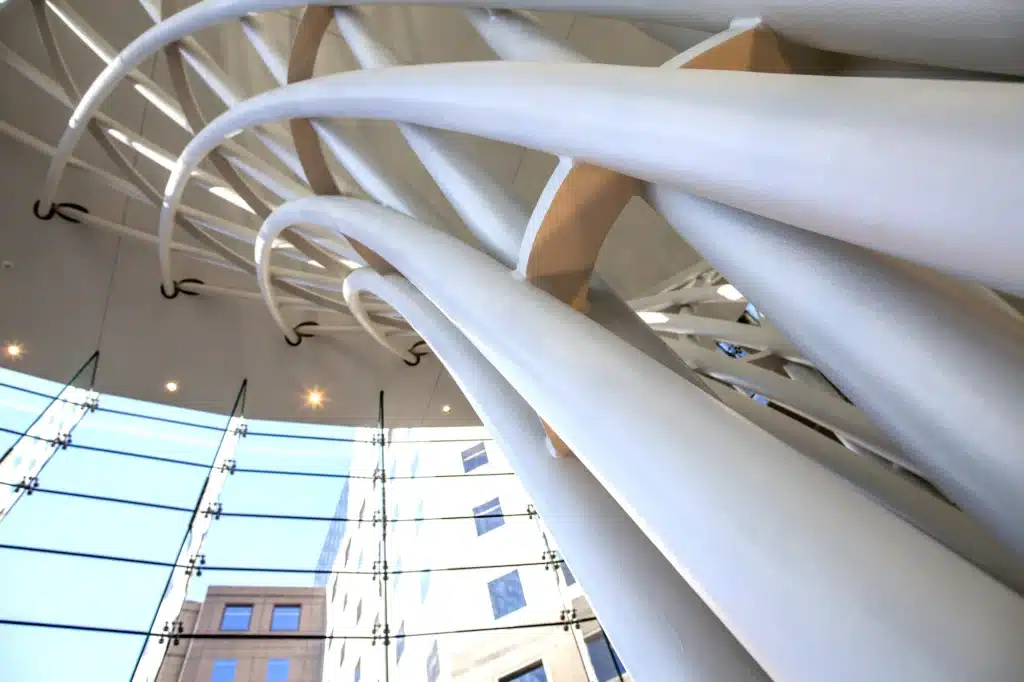
Intumescent products achieve fire ratings with lower-profile and nicer-looking materials vs. cementitious products
Read more in the latest issue of Protective Coatings Expert